Reading the Bromance

Reading the BromanceI’m very thrilled to have my work included in this terrific new book on the ‘bromance’ phenomenon, Reading the Bromance: Homosocial Relationships in Film and Television, edited by the wonderful Michael DeAngelis (DePaul University), out in June from Wayne State University Press in both print and ebook formats.

Reading the Bromance examines a wide range of films and TV shows replete with bromantic affection. As well discussion and analysis of bromance staples like The 40-year-old Virgin (2005), Knocked Up (2007), Superbad (2007), and I Love You, Man (2009), the book also focuses analytical attention on texts like Grumpy Old Men (1993), TV’s House, and Scream (1996); it addresses cross-cultural bromances as well, buddies in Hindi cinema, and much more. Readers will find discussion of men engaged in bromance’s obsession with mimicking homosexuality while insisting that these displays are indeed only mimicry.

My chapter is titled “‘This ain’t about your money, bro. Your boy gave you up’: Bromance and Breakup in HBO’s The Wire.” As its title indicates, this piece focuses on the acclaimed HBO crime drama The Wire. This show probably isn’t the first thing that jumps to mind when one thinks of bromance, yet The Wire abounds with close male partnerships. Centrally and critically celebrated is the relationship between drug kingpin Avon Barksdale (Wood Harris) and his right-hand man, Russell “Stringer” Bell (Idris Elba), which is phrased in terms of family but—I argue—consolidated in a series of romantic and virtually sexual gestures.

Authors include Hilary Radner, David Greven, Nick Davis, Meheli Sen, Jenna Weinman, Ken Feil, Peter Forster, Ron Becker, Murray Pomerance, and editor Michael DeAngelis.

Praise for Reading the Bromance:

Everything you always wanted to know about the bromance, but were afraid to ask! This new volume explores contemporary masculinity, homosocial desire, and homosexual/homophobic knowing as it plays out across film and TV texts such as I Love You, Man, Superbad, The Wire, Jackass, and Humpday. In thoughtful and provocative ways, DeAngelis and his authors cover the history, forms, and multiple meanings of this curious phenomenon. Essential reading for anyone interested in contemporary models of gender and sexuality.

– Harry M. Benshoff, Professor of Radio, TV, and Film at University of North Texas and author of Dark Shadows (Wayne State University Press, 2011)

This lively and perceptive collection of essays posits the ‘bromance’ film as an ambivalent response to gay liberation and the women’s movement that allows for expanded representations of male intimacy even when operating within heteronormativity. Reading the Bromance is a valuable volume for those who want to understand the role of gender and sexuality in contemporary popular cinema.

– Mary Desjardins, author of Recycled Stars: Female Film Stardom in the Age of Television and Video and co-editor of Dietrich Icon

Reading the Bromance‘s remarkably sophisticated essays analyze the twisted generic complexity of a long history of representing male-male relations. Studying the formula’s homosocial and heteronormative behaviors, these authors demonstrate how these texts permit fluid cultural and social adventures involving emotions, maturity, gender, taste, and physicality. A terrific collection.

– Janet Staiger, William P. Hobby Centennial Professor Emeritus in Communication and Professor Emeritus of Women’s and Gender Studies.

Reading the Bromance is available in June from Wayne State University Press.
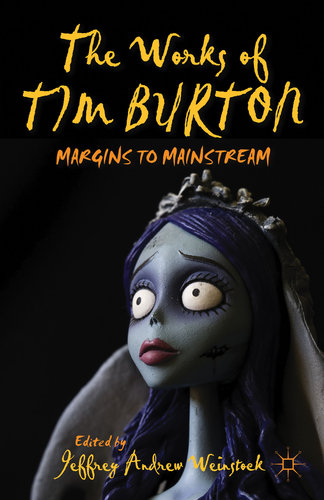


The Works of Tim Burton: Margins to Mainstream

Tim BurtonMy essay “‘This is my art, and it is dangerous!’: Tim Burton’s Artist-Heroes” is out now as a part of this splendid collection, The Works of Tim Burton: Margins to Mainstream, edited by Jeffrey Andrew Weinstock and published by Palgrave Macmillan. This book features insightful contributions by a diverse range of scholars, including Katherine A. Fowkes, Matt Hills, Murray Pomerance, Carol Siegel, Rob Latham, its outstanding editor Jeffrey Weinstock, and many others (full contents listed below). Focusing on a wide variety of topics related to this unique and culturally significant filmmaker, and examining his films from a variety of critical perspectives, The Works of Tim Burton is the most in-depth, complete and current academic study of the director’s work. Also available from Amazon, Book Depository, and Barnes & Noble online.

From the publisher:

Tim Burton has had a massive impact on twentieth and twenty-first century culture through his films, art, and writings. The contributors to this volume examine how his aesthetics, influences, and themes reflect the shifting cinematic practices and social expectations in Hollywood and American culture by tracing Burton’s move from a peripheral figure in the 1980s to the center of Hollywood filmmaking. Attentive not only to Burton’s films but to his art and poetry, this collection explores Burton’s popularity and cultural significance as both a nonconformist and a mainstream auteur.

Abstract for my chapter:

Characters with profoundly felt artistic talents and sensitivities dominate the films of Tim Burton: the introverted Edward Scissorhands (Johnny Depp) of the 1990 film of the same name stuns his detractors with a series of unlikely masterworks; Jack Skellington of The Nightmare Before Christmas (1993) is the celebritized and eagerly sought scare-artist of Halloween Town; in Corpse Bride (2005) Victor Van Dort (Depp) funnels his frustrations into musical composition. These portrayals are curiously complemented in Burton’s oeuvre by characters who appear as affected, inferior or even deadly, artists. The Joker (Jack Nicholson) of Batman (1989), for instance, pronounces himself “the first fully functioning homicidal artist,” before presenting his mutilated girlfriend as “a living work of art.” This chapter explores the foregrounding of creative art in Burton’s films, focusing especially on the figure of the artist-hero. It considers this recurring figure in relation to an auteurism that insists we recognize the “Tim Burton-ness” of each film (notice its particular artistry), traditional conceptualizations of art production, and the role of artistic practice in foregrounding individuality.

Praise for The Works of Tim Burton:

“Weinstock, who knows his unconventional filmmakers well, provides a carefully modulated trove of essays that effectively cover the Burton oeuvre, even as they demonstrate the perhaps surprising variety of his work. Each essay is a gem, with the whole adding up to a serious, provocative exploration of the films.”

–R. Barton Palmer, Director of Film Studies, Clemson University, USA, and author of Joel and Ethan Coen and Shot on Location: The Postwar American Realist Film

“Tim Burton is a phenomenon of modern film, blending the humorous, the horrific, the macabre, and the magical with extraordinary skill. Jeffrey Andrew Weinstock’s wide-ranging collection delves into Burton’s career from Frankenweenie (1984) to Frankenweenie (2012), exploring the richness of his themes, the complexity of his allusions, and the nonstop inventiveness of his visual style. A treat for Burton’s countless admirers, a welcoming introduction for newcomers.”

–David Sterritt, Professor of Film, Columbia University, USA, Chair, National Society of Film Critics


Film director Ed Wood (Johnny Depp) in Burton’s Ed Wood (1994): a unique artist—uniquely terrible.

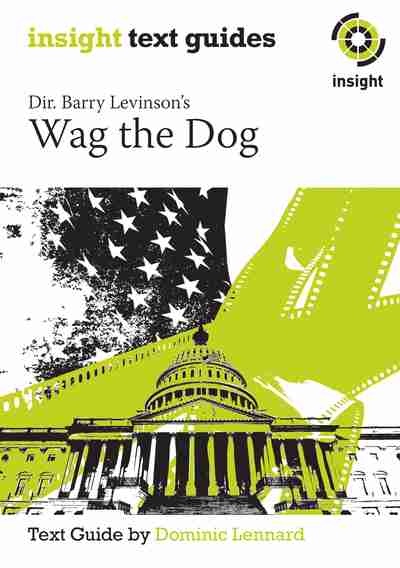
Wag the Dog (1997) film guide

Wag the Dog coverFreshly pressed: a guide to Barry Levinson’s political satire Wag the Dog (1997).  When the U.S. President is accused of making sexual advances toward a young girl in the lead-up to an election, his media advisers call in mysterious spin doctor Conrad Brean (Robert De Niro) to manage the scandal. Brean’s strategy involves concocting a fictional war with Albania to divert attention from the scandal. As this war will be an entirely a fictional production, he enlists eccentric film producer Stanley Motss (Dustin Hoffman) to “produce” it as he would a Hollywood film, and invest it with all the drama and mawkish sentimentality the media and public crave. Wag the Dog seemed almost uncannily topical when the Lewinsky scandal broke just a few weeks after its release; however, the film now also eerily recalls the artful “selling” of the Iraq War to the American public in 2003.

Wag the Dog has been added to the Australian year 11-12 curriculum, and this guide is especially designed for college-level students and their teachers. It contains: character map; synopsis; background on the writers and director; sections on genre, structure, and film style; detailed discussion of the film’s historical context; scene-by-scene analysis, with key quotes and study questions; detailed discussion of themes; essay questions; guidelines for planning and writing an essay; and sample essays written to year-11/12 A+ standard.

Available now from publisher Insight Publications, as well as Angus & Robertson, Co-op, Booktopia, and in electronic form through iBooks.  View preview.