Starring Amelia Foxton, Chiara Gizzi, and Stephen Hunter
Director of Photography: Tom Gleeson
Running time: 36 mins
Horror and humour achieve embryonic fusion in Australian director Glenn Fraser’s latest short film, Mother Tongue, written with wit and energy by Amelia Foxton. Alex (Chiara Gizzi) and Jade (Foxton) know all about parenthood from their hetero friends, who visit them only to sit slumped, exhausted—seemingly exsanguinated—by the ordeal. But this cutely clucky same-sex couple aren’t so easily put off. After repeated and steamily determined attempts at impregnation, however, they still don’t have a baby bump between them. Adoption holds no help, as the couple finds its woes compounded by process thick with prejudice.
They explore alternative options, but just how ‘alternative’ will they get? Enter Brian (Stephen Hunter), the black magic sorcerer who promises he can conjure these two a kid. He’s also a try-hard deadshit operating out of an unassuming beige-brick flat. From here, Alex and Jade find themselves entangled in the increasingly wacky world of the suburban occult because, surprise surprise, Brian may be less useless than he appears. Maybe this will work after all? However, we know from the film’s opening—from Jade and Alex’s friends—how enslaved parents are to their infant overlords, and there may be even greater sacrifices in store for this couple.
Fraser and Foxton’s film pulses along through its inspired and knowing embrace of horror tropes—here delightfully embedded in everyday domesticity. Involving and often very fun performances draw much richness from the full veins of Foxton’s script and, despite the film’s short running time, its characters are vividly drawn, with Alex the more reactive and intense of the duo, alongside the more patient and protective Jade, who finally accepts her partner’s pleas to explore every last option. The film also looks splendid, easily immersing us in atmospheres by turns erotic, alarming, and absurd. Parenthood sure seems draining, but you’ll be tickled and fulfilled by Mother Tongue.
As an eight-year-old, I swapped a handful of pocket money for Highway to Hell on cassette at a now defunct department store, FitzGerald’s, on Hobart’s eastern shore. If I’d even heard of AC/DC at the time it was only in passing. They weren’t on my mind when I walked in there. I have censorship to thank.
My neighbour’s older brother had several Guns ‘N’ Roses releases on CD. Among us kids, CDs were a sort of deluxe rarity. No one I knew’s parents had a CD player in their car. My parents had a CD player newly installed in their bedroom around this time, and that’s where the thing stayed. I didn’t have any CDs anyway and my parents had only one or two themselves. Cassettes were what we trafficked in—sometimes copies of copies. I had taped copies of several GNR albums and I was trying to buy one of my own. Accompanied by mum, I’d pointed over the counter to the G N’ R Lies cassette. The attendant obliged but, as was also her obligation, politely directed my mother’s attention to the parental advisory sticker on the case. Mum wasn’t having it: “No, sorry,” she told me, “You can’t get that one.” The attendant sympathetically gestured to copies of Highway to Hell on the counter to her left, with its now discontinued Australian-release cover: the lads looming and leering out the inferno as a guitar fretboard-turned-highway vanishes into the flames: “You might like this one?” she suggested. I took it, and from then on, with AC/DC, it was no stop signs, speed limits…
Highway to Hell, 1989 cassette re-release, Albert Productions. Originally released in 1979. Scan by Discogs.com
In fact, years later I bought Lies: hardly terrible but obviously at the inferior end of the GNR catalogue. Lady steered me right. I remember a polite twenty-something, maybe even a teenager, just doing her job. Whoever she was, she can’t know that she set me on a musical highway I’d still be cruising thirty-odd years later.
Having heard little of AC/DC on the radio at that age, and never watching music videos, I was left to explore the band alone. At the time I couldn’t have told you which songs from Highway to Hell were the singles. I gradually expanded my collection of tapes at a rate pocket- or birthday-money would permit. That wasn’t fast, so each album got played through over and over, really devoured and digested. This is still how I prefer to listen to the band today: album by album. Some may like Spotify to curate a dessert of hits but I still prefer the full-course meal.
And so I present, all of it according to me, the deep album cuts of AC/DC. The band might be a rock and roll phenomenon, but the fellas still have a horde of tearing tracks that are routinely ignored, underplayed or even unknown to the casual fan. What is a “deep cut” anyway? For my purposes it’ll mean a track from one of the studio albums that wasn’t released as a single. Additionally, it can’t have been part of the band’s live set for any real length of time. It also can’t be the title track: thumpers like “Fly on the Wall” or “Ballbreaker” might be underplayed, but they can’t count as deep album cuts. As we go, I’ll highlight my favourites then isolate only one “top pick”. Okay, enough Beating Around the Bush.
T.N.T. (1975, Australia only) and High Voltage (1976):
Singles: “Love Song” / “Baby, Please Don’t Go”, “High Voltage”, “It’s a Long Way to the Top (If You Wanna Rock ‘n’ Roll)”, “T.N.T.”
Deep cut cache: “Little Lover”, “Rock ‘n’ Roll Singer”
Top pick: “Rock ‘n’ Roll Singer”
Comment: “Live Wire”, “Rocker” and “The Jack” are disqualified for getting a good run live. After “It’s a Long Way…” opens T.N.T. and the international edition of High Voltage, “Rock ‘n’ Roll Singer” maintains the momentum, with Bon barking a more anarchic account of yearning for the showbiz life. Rock and roll, stripped down and sweaty.
Comment: “Rocker”, one of the album’s best, is disqualified for its live showings, most notably on the If You Want Blood live album. The melancholic cruiser “Ride On” has developed a reputation among fans but the amusingly tasteless “Squealer” takes number one spot for me for its classic AC/DC grunt and gutter-humour.
Let There Be Rock (1977)
Singles: “Dog Eat Dog”, “Let There Be Rock”, “Problem Child”, “Whole Lotta Rosie”
Deep cut cache: “Overdose”
Top pick: “Overdose”
Comment: “Bad Boy Boogie”, far and away my favourite of the album, is disqualified again for live popularity, as is “Hell Ain’t A Bad Place to Be”. That doesn’t leave a lot on this famously raw and raucous album. Nevertheless, the headbanging ode to obsession, “Overdose”, is just the right prescription.
Powerage (1978)
Singles: “Rock ‘n’ Roll Damnation”
Deep cut cache: “Down Payment Blues”, “Gimme a Bullet”, “What’s Next to the Moon”, “Gone Shootin’”, “Up to My Neck in You”, “Kicked in the Teeth”
Top pick: “Gone Shootin’”
Comment: “Riff Raff” and “Sin City” disallowed for live popularity. Despite that there’s still plenty to pick from on the oft-overlooked Powerage (maybe it was that dreadful album cover?). For me it’s the easy-does-it, cruising momentum of “Gone Shootin’” that best hits the spot.
Highway to Hell (1979)
Singles: “Highway to Hell”, “Girls Got Rhythm”, “Touch Too Much”, “Beating Around the Bush”
Deep cut cache: “Walk All Over You”, “If You Want Blood (You’ve Got It)”, “Night Prowler”
Top pick: “Night Prowler”
Comment: Is there even a bad song on “Highway to Hell”? The pinnacle of the Bon Scott years seems to hit us at every turn with tracks filled with grunt, groove, humour and menace. And much of the menace comes from the closer, “Night Prowler”, an atmospheric and sinister sonic horror tale.
Back in Black (1980)
Singles: “You Shook Me All Night Long”, “Hells Bells”, “Rock and Roll Ain’t Noise Pollution”, “Back in Black”
Deep cut cache: “Have a Drink on Me”, “Shake a Leg”
Top pick: “Have a Drink on Me”
Comment: Can anything on Back in Black, the second highest-selling album in music history, really be termed a “deep cut”? Well, I gave it a shot anyway. Their mischievious star Bon Scott having tragically burned out, AC/DC were reasonably expected to fade away. Instead, they released perhaps their most celebrated album, featuring the upbeat radio favourite “You Shook Me All Night Long”, the punch-crunch riffing of “Back in Black”, and the swaying menace of “Hells Bells”. It also contained some of the band’s most sexist songs: what was previously schoolboy (often self-effacing) humour attained a nastier tone in “Givin’ the Dog a Bone” and “What You Do for Money Honey” (also among the album’s weaker tracks). They’d get this horny-humor balance better into the future. Meanwhile, back on the deep cut question: it’s hardly unheard of, but “Have a Drink on Me” slams as good as the singles.
For Those About to Rock (1981)
Singles: “For Those About to Rock (We Salute You)”, “Let’s Get It Up”
Deep cut cache: “Inject the Venom”, “Breaking the Rules”, “Spellbound”
Top pick: “Spellbound”
Comment: Opening with its epic, window-rattling title track, For Those About To Rock seems more than a match for its celebrated predecessor. Alas, the momentum slackens as we settle into a good if not outstanding album. I’m a big fan of “Inject the Venom”, a lumbering yet brutishly catchy tune about, apparently, administering lethal injections. However, for my number one pick it’s hard to overlook the album’s closer, “Spellbound”, a rough-edged and melancholic gem as entrancing as its title. Not too many AC/DC tracks like this one.
Flick of the Switch (1983)
Singles: “Flick of the Switch”, “Guns for Hire”, “Nervous Shakedown”
Deep cut cache: “Rising Power”, “This House is on Fire”,”Bedlam in Belgium”
Top pick: “This House is on Fire”
Comment: With the band on a downward slide commercially, the slapdash cover for Flick of the Switch probably didn’t help move any more units. Nevertheless, a raw and bruising album full of no-frills foot-stompers, including “This House is On Fire.”
Fly on the Wall (1985)
Singles: “Danger”, “Sink the Pink”, “Shake Your Foundations”
Deep cut cache: “Stand Up”, “Playing with Girls”, “Back in Business”
Top pick: “Stand Up”
Comment: With its rough-as-guts production, Fly on the Wall is often pegged as the band’s worst album. It isn’t. However, a medley of quirky videos that distracted and detracted from the Youngs’ crashing riffage did it no real favours. “Danger,” one of the album’s weaker tracks and an unfortunate choice for the first single, is cluttered by a weirdly shrill and ear-splitting solo from Angus and went over like a fart in church with the live crowd.
Here’s my two cents: don’t let Fly on the Wall‘s reputation deter you. Play it loud. Embrace the noise. It’s true that on a couple of tracks Brian sounds like he’s wailing from the bottom of a well somewhere in his native Durham. But the whole thing is characterised by a whiplashing, raucous charm. In songs such as “Sink the Pink” and “Shake Your Foundations” the lead guitar launches out in firey flourishes, supercharging an album already full of pounding, anthemic choruses. Fly on the Wall is a low-key favourite of mine, with several hidden gems, including the snarling gangster boast “Back in Business”; however, it’s “Stand Up” that sticks out most.
Blow Up Your Video (1988)
Singles: “Heatseeker”, “That’s the Way I Wanna Rock and Roll”
Deep cut cache: “Meanstreak”, “Go Zone”, “Sum Sin For Nuthin’”, “Ruff Stuff”, “Nick of Time”
Top pick: “Go Zone”
Comment: Look, I know a lot of people aren’t really fans of Blow Up Your Video, although I’m never really sure why that is. The production is a little staid, but I wouldn’t skip a single song on it. The singles are high-energy, but the album as a whole has a mix of moods and tempos, from the cocky strut of “Meanstreak” to the gloomier “Two’s Up”. I’ve selected “Go Zone” for top pick, but this is an album (ignored as it often is) that feels like it’s almost totally made up of decent deep cuts.
The Razors Edge (1990)
Singles: “Thunderstruck”, “Moneytalks”, “Are You Ready”, “Rock Your Heart Out” (Australia only)
Deep cut cache: “Mistress for Christmas”, “Shot of Love”, “Goodbye & Good Riddance to Bad Luck”
Top pick: “Mistress for Christmas”
Comment:The Razors Edge came out around the time I was getting into AC/DC, and what a time to get into them: the release of a blockbuster album that spawned their biggest hit in the States. I remember the thrill and fascination of seeing the music video for “Thunderstruck” come on TV—of seeing a band I’d heard plenty but never before seen. Razors‘ sound is polished yet powerful, and it’s another album with a range of hard rock moods, from the surging and high-spirited Moneytalks to the fearsome title track. I’ve picked “Mistress for Christmas”: it’s nothing but fun, but with a tremendous build-up and blistering lead work from Angus. Deck the halls, baby.
Ballbreaker (1995)
Singles: “Hard as a Rock”, “Cover You in Oil”, “Hail Caesar”
Deep cut cache: “The Furor”, “Burnin’ Alive”, “Whiskey on the Rocks”
Top pick: “The Furor”
One of the band’s most underrated albums, Ballbreaker features numerous songs that have that lean, crunchy and sinister sound that would all but disappear from the next album. Mysteriously cold-shouldered by critics, it nevetheless remains one of my favourites since its release. I’m really hard-pressed to pick a favourite deep cut here. But, balls in a vise, I’m going with “The Furor”.
Stiff Upper Lip (2001)
Singles: “Stuff Upper Lip”, “Safe in New York City”, “Satellite Blues”,
Deep cut cache: “Hold Me Back”, “Can’t Stand Still”, “Damned”
Top pick: “Damned”
Comment:Stiff Upper Lip really roars the engine with that title track—instant classic—but then largely settles down into a cruisier rhythm. With its steady-rolling bluesy swagger, this album has really grown on me over the years. Nevertheless, I’ll pick perhaps the slowest and heaviest song on there, “Damned”, as my choicest deep cut. Bon appetit.
Black Ice (2009)
Singles: “Rock ‘n’ Roll Train”, “Big Jack”, “Anything Goes”
Deep cut cache: “Wheels”, “Rock ‘n’ Roll Dream”
Top pick: “Wheels”
Comment: I’ll confess it here: I’ve tried hard to like Black Ice, but I found it largely disappointing then and find it disappointing today. “Rock ‘n’ Roll Train” is enjoyable enough if a little too procedural, even calming, for the first single to a long-awaited album. “Big Jack” has some legs under it, but I don’t find it a standout. And if “Rock ‘n’ Roll Train” seems a little calming, “Anything Goes” is virtually cutesy: probably my least favourite single the band have released. “Rock ‘n’ Roll Dream”, with the band again in a mellow mood, is nevertheless a nicely dreamy distraction. But thank goodness for the nasty, muscular swing of that title track, right at the end of the album, Ballbreaker-style. Fantastic. Generally, though, on Black Ice there are too many songs and too few of them stand out. One that does, though, is “Wheels”: plenty of momentum on this polished, upbeat and unpretentious rocker.
Rock or Bust (2014)
Singles: “Rock or Bust”, “Play Ball”, “Rock the Blues Away”
Deep cut cache: “Miss Adventure”, Baptism by Fire”, “Rock the House”, “Sweet Candy”
Top pick: “Baptism by Fire”
Comment: Fifteen years after Black Ice, the band was back with Rock or Bust, although sadly with Malcolm’s health preventing his playing on either the album or the subsequent tour. A much shorter release than Black Ice, Rock or Bust (despite its generic title) features songs with more overall stand-out value than its predecessor. The gorgeously snappy guitar sound brings out the groove throughout on an album that, if not a classic, still holds its own in the band’s catalogue. For your deep immersion, I suggest “Baptism by Fire”. I know they gave this one a run on the album tour but it’s not (yet?) a setlist staple.
Power Up (2020)
Singles: “Realize”, “Shot in the Dark”, “Through the Mists of Time”, “Witch’s Spell”
Deep cut cache: “Kick You When You’re Down”, “Demon Fire”, “Money Shot,” “Systems Down”
Top pick: “Money Shot”
Comment: Along with Blue Öyster Cult, AC/DC came to the rescue during the pandemic’s lockdown era by releasing new material right when it was most needed. The latter gave us Power Up (styled as PWR/UP), charged and glowing in tribute to the departed Malcolm. In case you thought they’d lost their ribald sense of humour, though, we have here not only the cheeky single “Shot in the Dark” but also the dirty grandpa devilry of “Money Shot.” “Demon Fire” is a headlong scorcher, but having its own official video raised its profile enough. “Money Shot” can take the prize.
And that’s that. Did I miss any of your favourites? If so, I’d love to hear about them. Share your thoughts below.
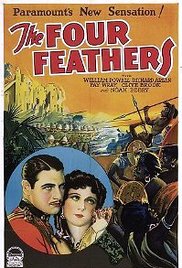
THE FOUR FEATHERS (Silent, 1929)
Dirs. Merian C. Cooper, Lothar Mendes, and Ernest B. Schoedsack
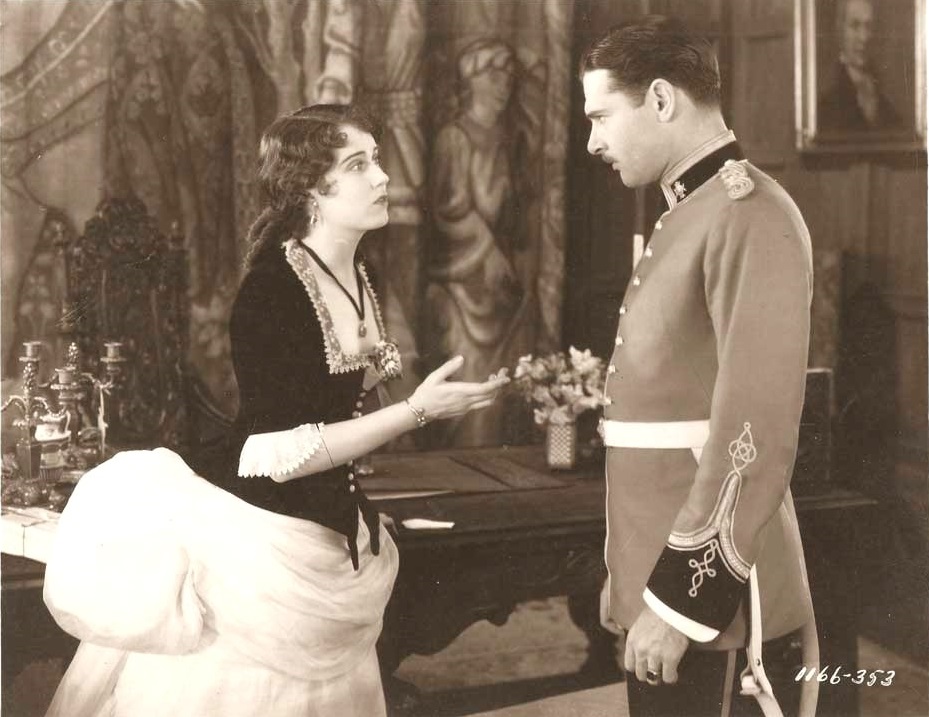
Those familiar with The Most Dangerous Game (1932) and King Kong (1933) know producer-directors Merian C. Cooper and Ernest Schoedsack’s swashbuckling sensibilities, and in this silent, pre-Kong collaboration between the two (with Lothar Mendes) we get a pulpy yarn of wartime rescue, heroism and redemption. When British military gent Lt. Harry Faversham (Richard Arlen) evades his duty in favor of marrying his childhood sweetheart (Fay Wray) immediately, he drags himself and his family into disgrace. The film’s title derives from four feathers he receives from those once close to him (including a very unimpressed fiancée who’s now embarrassed to be betrothed to such a wimp), the items offered as symbols of his cowardice. However, when his cohorts are captured in Africa he concocts a plan to infiltrate the enemy stronghold and ferry them to safety, thereby restoring his honor.
The codes of heroism and masculinity on display here are of course remarkably dated by now; however, even by 1929, in the aftermath of the Great War, the chivalry of soldiering was under considerable scrutiny. Nevertheless, the film’s angst-ridden premise sets up some fine action as the Brits battle their captors, and a particularly momentous chase sequence (albeit with some discomforting animal involvement). The Four Feathers hardly stands alongside Schoedsack and Cooper’s more famous efforts, but it’s an enjoyable excursion before bigger things to come. 3 / 5
Crocodilian chaos in Australia’s Northern Territory: When one particularly big brute starts snacking on humans, it’s up to wildlife ranger and conservationist Steve Harris (John Jarratt) to bring it to heel. With a sensible respect for the local wildlife, Steve wants to stop the killer croc while preventing a crew of mad hunters (eager for an excuse to indulge their bloodlust) from hitting the creeks for a pump-action killathon.
Aboriginal elders warn Steve that this ain’t no ordinary crocodile: In addition to its size, this creature is “proper old” and “wise,” they say. He’s also a figure in their Dreaming and they refuse to participate in killing him. The initial attack is provoked by the incursions of racist poachers, and Dark Age carries a strong anti-colonial subtext, evoking a land stolen and its ecology ignored and degraded.
The largest reptile on earth, and with the gnarled look of a nasty dinosaur, the saltwater croc’s menace is wonderfully evoked with reference to its prehistoric origins (hence the film’s title), as well as its role in a timeless Aboriginal spirituality. In a nod to Jaws, the local bigwig (played by Home and Away veteran Ray Meagher) is concerned about tourism: Japanese investors set to build the town up mustn’t be scared off. Ultimately, Dark Age depicts an outback culture whose powerful players are in hot pursuit of modernization and money, trying to leave behind an indigenous history—and present—to which the creature is connected. The subtext comes on a little strong at one or two points, but amid numerous less imaginative Jaws-imitators it’s refreshing to see a film so brimming with ideas.
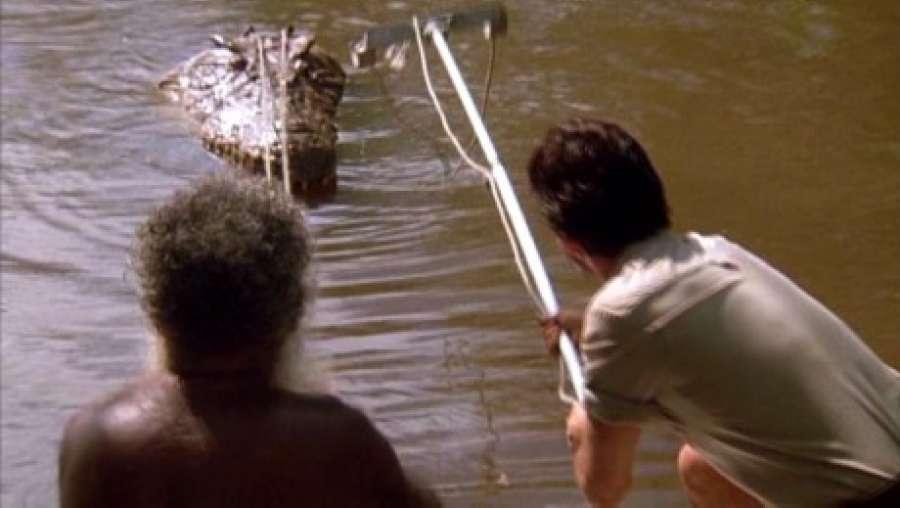
The film’s score, heavy on the synth drums, is at times distractingly dated, and can’t always summon the intensity required (especially during a Jaws-like pursuit of the predator). The crocodile effects are also limited and sometimes log-like: one shot of the croc on the water’s surface seems to terminate because the model is slowly drifting off to the left. Shots of the brute in motion could have been livened up with some strategically edited and inserted stock footage. That aside, the film invests properly in its human drama, and tensions within the town (and culture more broadly) are played out through strong performances. As implied above, though, the film is perhaps most effective in its evocation of Australia as a kind of haunted land: a place with an ancient identity of which its white inhabitants are ignorant, but which nevertheless bursts violently forth from the past—and bites. 3.5 / 5
From deep within an Australian Outback as grotesquely gothic as any Tim Burton landscape comes Razorback, feral boar titan, to freight-train through your living room and steal your baby. Yes, your baby. I don’t know what it does with the baby. Presumably it eats him. The film doesn’t get a whole lot more sensible than that, but for those with a taste for horror with an absurdist touch: pig out.
To the land of the weird ventures American journalist and animal-lover Beth Winters (Judy Morris), intent on reporting the country’s heartless massacre of marsupial ‘pests’. Yet with Hogzilla on the prowl the story is bigger than she realizes. Not only is the wildlife more than she bargained for, but so too are the locals, the worst of whom—a couple of yawping, greasy, black-tooth hunters—intrude with a villainy of their own.
Meanwhile, grizzled pig-shooter Jake (Bill Kerr), grandfather of the stolen baby, begins a Quint-like quest against the beast. Regrettably, Jake is but a shadow of his animal-horror influences, and the film suffers here from its indecisive tone: it’s hard to develop a scarred and serious character in a circus like this. Leaving that aside, Razorback is stylish and garishly striking—fairly well-financed but shot with an irresistible exploitation verve. The final showdown with the big boy (with much organ-pounding over the soundtrack) is sort of scarier than the rest of it, but foremost a silly delight. 3.5 / 5
An intense and aggressive domestic drama descends into experimental horror in Żuławski’s cult classic Possession. Steered visually by the restless cinematography of Bruno Nuytten the film constructs a world pervaded by uncertainty, discomfort, and a sense of worse to come. The initial horror is of an everyday nature: Mark (Sam Neill) arrives home to Berlin to discover his wife Anna (Isabelle Adjani) has been having an affair and is not the least bit sorry about it either. He turns on the insecure male hysterics and quickly drives her to a similar pitch—then beyond. However, in an apartment downtown Anna has been keeping (and gradually growing) a more monstrous secret, and as her behavior becomes more and more unhinged the film explodes into a warped and chaotic exploration of loathing, desire, and frustration.
As the above perhaps suggests, Żuławski’s film focuses at least partially on ‘possession’ in terms of sexual behavior: Sam Neill feels his cheating wife has acted like one ‘possessed,’ although in doing so highlights his own desire for ‘possession’ (of her). Character interactions are histrionic from the outset but often powerfully so—commanding our stunned attention with so much emotional mess. Beyond sexual ‘possession,’ the film is famous for its scenes of female madness, which are indeed remarkable and transfixing. Yet one scene in particular (you will pick it) is so explosive it seems to repel any possible identification or sympathy, risking a kind of objectifying ‘insanity porn’—a display foremost for our shock and amazement. Or perhaps in its transgressive and apocalyptic intensity (far beyond narrative or meaning) the moment achieves a kind of liberatory chaos? I expect opinions vary.
The mysterious Thing kept by Anna in her grubby parody of the domestic environment is darkly fascinating, yet the film seems occasionally to lose interest in it, so the device isn’t quite explored to its full visual or metaphoric potential. Ultimately the themes of partner-perfection and obedience are provocative and troubling, and the film’s emotional collisions both traumatic and captivating. But in addition to Anna’s startling hysterics, a very kooky paramour, the monster and a doppelganger there’s also talk of souls and death and God—and really there’s just a bit too much thrown in for us to get an intellectual or emotional feel for its implications. Disorienting sometimes to its detriment, Possession is nevertheless a work of wild and commendable audacity. 3.5 / 5
Good old-fashioned revenge doesn’t get much better than this down and dirty lead crusade from Giulio Petroni. On the kind of sodden night from which nothing good can come a gang of hoods storm the home of the young Bill Meceita, murdering both his parents. 15 years later, all grown up and more than handy with a gun, Bill (John Phillip Law) sets out for revenge. Meanwhile, Ryan (Lee Van Cleef), an outlaw as weathered as the rocks he splits during his term of hard labor, is finally granted release and begins his pursuit of the crooks who double-crossed him into the slammer in the first place. You guessed it: they’re the same low-lives.
The storyline of Death Rides a Horse packs a crude punch, but the ominous atmosphere is what really sucks one into this graceful and aggressive film. The rumbling strains of Morricone’s score effortlessly summon dread or exhilaration as required, and the opening attack scene is a horrid thrill-piece of trepidation—moody enough to be captivating and tumultuous enough to be genuinely threatening. The cinematography here arrests us at every turn: shots of the cutthroat legion moving over the hill toward the farm in the blinding rain, of water cascading off low hat brims, of hooves stepping with dire purpose through the mud.
Although the film’s main interest is action—the simple pleasure of watching a couple of tough hombres take care of business—Petroni’s stylistic flair lends a symbolism of its own to these proceedings. The treachery and isolation of the Western landscape, the inexorability of fate, and the development of a surrogate father/son relationship between Ryan and Bill are all evoked.
The minimalist characterization and straight-up firepower of Death Rides a Horse won’t appeal to all viewers, but for those keen on a tightly plotted thriller content to let the lead do the talking, the film is a treat. 4 / 5
1981 was the year of the wolf, unleashing on cinemas both An American Werewolf in London and The Howling as well as Michael Wadleigh’s captivating Wolfen, the director’s first and final non-documentary feature. Albert Finney plays troubled NYC detective Dewey Wilson investigating a series of gory kills, beginning with the mutilation-murder of a real-estate tycoon and his wife. Big Money of course has plenty of enemies, and possibly connected is a militant Native American activist, Eddie Holt (Edward James Olmos). But this crime-scene suggests some hairier happening.
Eschewing the sexual subtexts of its contemporaries, Wolfen instead gestures to an ancient and unknowable animal world never quite vanquished. Like much animal horror, Wolfen imagines the creature’s point of view as it stalks its human prey; yet these shots are used so extensively that the technique threatens to destabilize familiar human points of view associated with the order and normality Wilson seeks to restore. The resulting impression is that this threat is not merely some aberration of civilized life to be corrected by good policing, but a rival reality—ever-present and always waiting for the inevitable demise of western “progress.”
This theme is hauntingly imbued in images of industrial and residential dilapidation—urban rubble through which the wolves stalk their prey. As Wilson tracks his targets, a tingling, stealthy score by James Horner accents (and never smothers) the film’s shivery atmosphere. A film as dark, graceful and bewitching as its elusive antagonists. 5 / 5
Audible Studios, April 26, 2016
Length: 4 hrs and 31 mins
The golden age of radio drama may be in the past, but audiobook subscription service Audible supplies an enthralling extension to the saga of Warrant Officer Ellen Ripley, and of creatures and memories that also refuse to be left behind. The play is approximately novel-length (indeed based a novel by Tim Lebbon) and divided into chapters of around 25-30 minutes long, complete with not merely dynamic voice performances, but also sound-effects and a score—by turns eerie, momentous and mournful—to bring the production to vivid, egg-opening life.
The narrative picks up after the events of the first film as Ripley’s escape pod is intercepted by the crew of a mining vessel, who begin having a xenomorph problem of their own. Consequently Ripley, here played with all the characteristic mannerisms by Lauren Lefkow, is on hand to tell them how fucked they are—before becoming the key adviser against the threat. Meanwhile, android Ash, played by (and dismembered as) Ian Holm in the original film and now performed by Rutger Hauer, is up to old tricks. Hell-bent on fulfilling his mission for the Company of transporting an intact alien specimen, Ash’s disembodied artificial intelligence infiltrates and contaminates various ship systems to sabotage this new team’s efforts. Conceptually and tonally, the film strikes a balance between the first and second films, combining the original’s focus on malignant AI and a crew under-prepared for the menace they face with plenty of action as the creatures close in.
This is a recorded drama, so there is no ‘narrator’ and the dialogue does an excellent job of signalling to listeners what’s occuring without seeming contrived. Only at one point, during a scene of high action, did this mode feel slightly remiss in terms of timely communication. A regular verbal log kept by Ash, for benefit of the Company, also helps clarify chapter events as well as providing a sinister counter-narrative to the trials faced by human characters.
This new story is thrilling and energetic, yet retains the technical flourishes that helped plausibly underpin the films. The only let-down here is that while the drama initially presents as an ‘alternative’ timeline, later turns of the narrative work to re-integrate what has happened into the existing Alien chronology in a manner that seems clunky and unnecessary. Nevertheless, this hardly makes much of an acid burn on such an gripping and gorgeous production. A must for fans of the franchise. 4.5 / 5
Hammer’s sequel to Quatermass 2 (1957) earns most of its stars through a warped and imaginative conclusion; the closing scenes of this wordy film demonstrate surprisingly eerie imagination—finally showing us something wordlessly (and exquisitely) weird.
But before that: Professor Bernard Quatermass (Andrew Keir) is summoned to help investigate a mysterious metallic shell uncovered during tunnel repairs to the London Underground. He extracts from within some big crusty bugs—perfectly preserved fossils—that he deduces are ancient Martians. Naturally the authorities won’t have a bar of it, and hinder his every step. Meanwhile the craft itself begins acting up, hurtling nearby objects and inducing madness in a few of its meddlers.
Diverging from iconic Hammer fare in its modern, urban setting, the film is a rather low on atmosphere early on, focusing primary on the Professor’s inquiries being stymied by obnoxious officials. Given the innovative Underground setting, one thinks of the missed opportunity to play on this more fully (perhaps using a few haunted-house conventions to evoke a uniquely urban sense of the uncanny). Moreover, the earliest strange happenings (objects levitating near the craft) are disappointingly explicable—by visible wires.
The pace quickens after the plot has been rather exhaustively unpacked (an explanation involving local legends, ancestral memories, psychic powers and alien ethnic-cleansing). Then we get what we’ve surely been waiting for all along: quakes and chaos emanating from the Underground to threaten busy London above. Most effective is the film’s attribution of a sense of the ‘demonic’ to its ultimately extra-terrestrial menace. Once this note is resoundingly struck, the technical mumbo-jumbo of science-fiction seems left behind, allowing us to be held and haunted by the film’s final spectacles of terror. 3.5 / 5


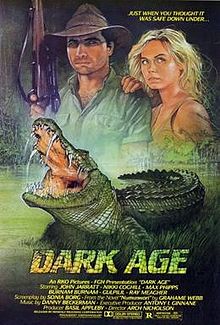 Crocodilian chaos in Australia’s Northern Territory: When one particularly big brute starts snacking on humans, it’s up to wildlife ranger and conservationist Steve Harris (John Jarratt) to bring it to heel. With a sensible respect for the local wildlife, Steve wants to stop the killer croc while preventing a crew of mad hunters (eager for an excuse to indulge their bloodlust) from hitting the creeks for a pump-action killathon.
 Ultimately, Dark Age depicts an outback culture whose powerful players are in hot pursuit of modernization and money, trying to leave behind an indigenous history—and present—to which the creature is connected. The subtext comes on a little strong at one or two points, but amid numerous less imaginative Jaws-imitators it’s refreshing to see a film so brimming with ideas.
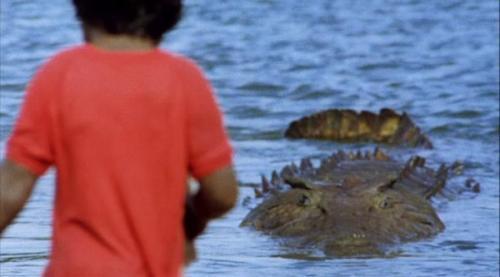 The film’s score, heavy on the synth drums, is at times distractingly dated, and can’t always summon the intensity required (especially during a Jaws-like pursuit of the predator). The crocodile effects are also limited and sometimes log-like: one shot of the croc on the water’s surface seems to terminate because the model is slowly drifting off to the left. Shots of the brute in motion could have been livened up with some strategically edited and inserted stock footage. That aside, the film invests properly in its human drama, and tensions within the town (and culture more broadly) are played out through strong performances. As implied above, though, the film is perhaps most effective in its evocation of Australia as a kind of haunted land: a place with an ancient identity of which its white inhabitants are ignorant, but which nevertheless bursts violently forth from the past—and bites. 3.5 / 5
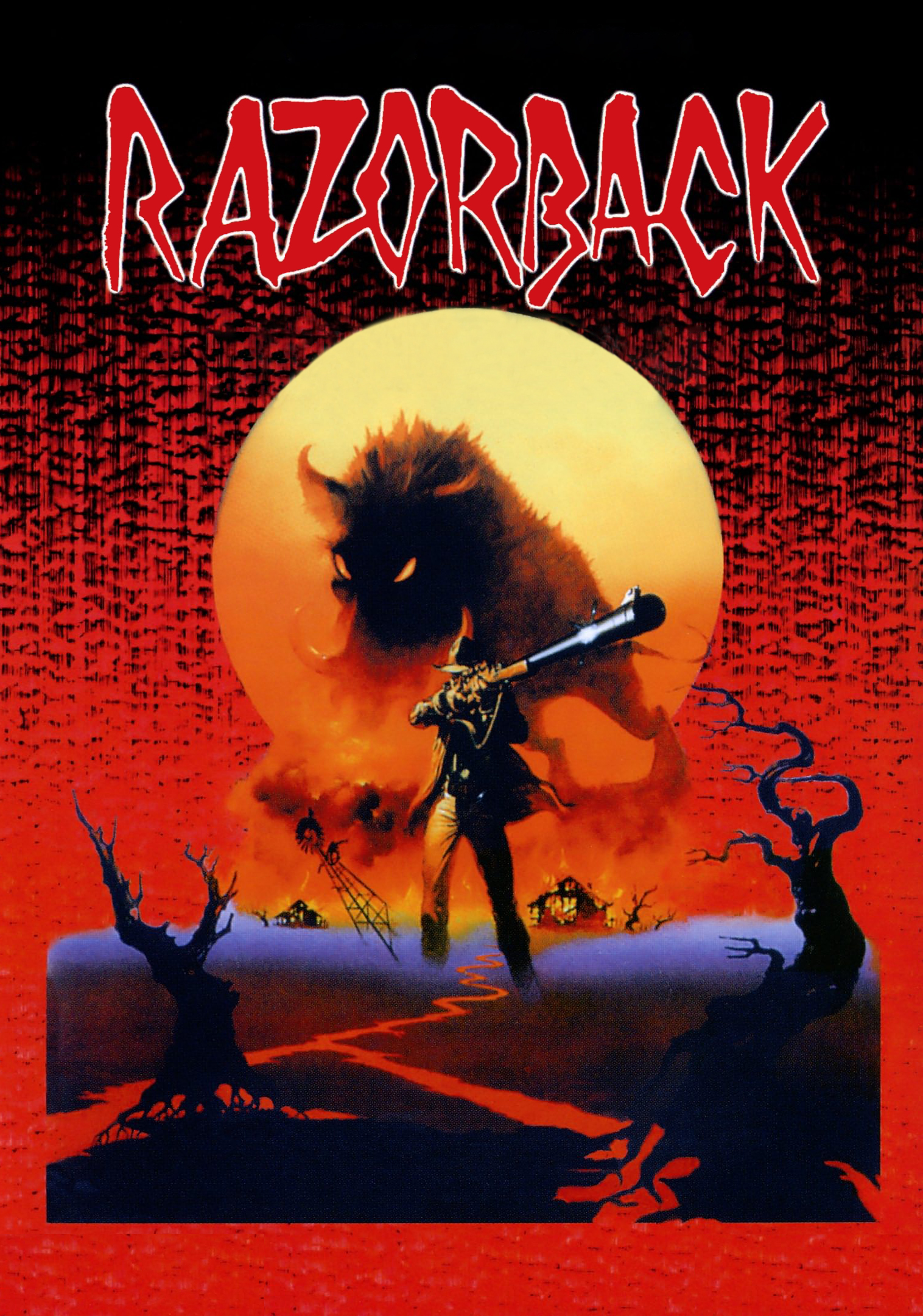 RAZORBACK (1984)
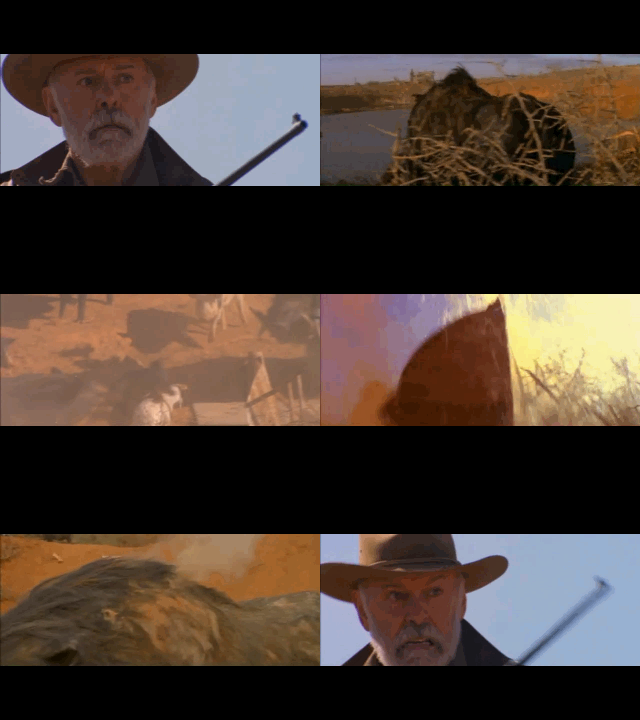 Meanwhile, grizzled pig-shooter Jake (Bill Kerr), grandfather of the stolen baby, begins a Quint-like quest against the beast. Regrettably, Jake is but a shadow of his animal-horror influences, and the film suffers here from its indecisive tone: it’s hard to develop a scarred and serious character in a circus like this. Leaving that aside, Razorback is stylish and garishly striking—fairly well-financed but shot with an irresistible exploitation verve. The final showdown with the big boy (with much organ-pounding over the soundtrack) is sort of scarier than the rest of it, but foremost a silly delight. 3.5 / 5
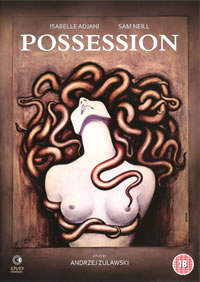 An intense and aggressive domestic drama descends into experimental horror in Żuławski’s cult classic Possession. Steered visually by the restless cinematography of Bruno Nuytten the film constructs a world pervaded by uncertainty, discomfort, and a sense of worse to come. The initial horror is of an everyday nature: Mark (Sam Neill) arrives home to Berlin to discover his wife Anna (Isabelle Adjani) has been having an affair and is not the least bit sorry about it either. He turns on the insecure male hysterics and quickly drives her to a similar pitch—then beyond. However, in an apartment downtown Anna has been keeping (and gradually growing) a more monstrous secret, and as her behavior becomes more and more unhinged the film explodes into a warped and chaotic exploration of loathing, desire, and frustration.
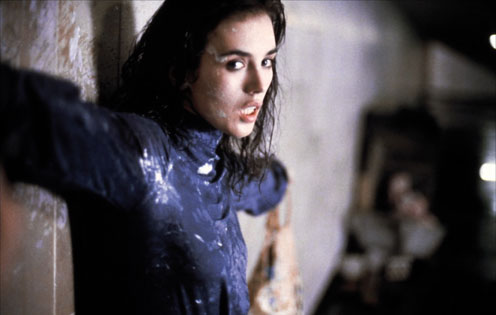 possible identification or sympathy, risking a kind of objectifying ‘insanity porn’—a display foremost for our shock and amazement. Or perhaps in its transgressive and apocalyptic intensity (far beyond narrative or meaning) the moment achieves a kind of liberatory chaos? I expect opinions vary.
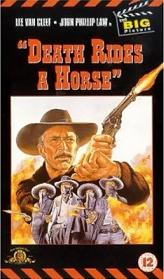 Good old-fashioned revenge doesn’t get much better than this down and dirty lead crusade from Giulio Petroni. On the kind of sodden night from which nothing good can come a gang of hoods storm the home of the young Bill Meceita, murdering both his parents. 15 years later, all grown up and more than handy with a gun, Bill (John Phillip Law) sets out for revenge. Meanwhile, Ryan (Lee Van Cleef), an outlaw as weathered as the rocks he splits during his term of hard labor, is finally granted release and begins his pursuit of the crooks who double-crossed him into the slammer in the first place. You guessed it: they’re the same low-lives.
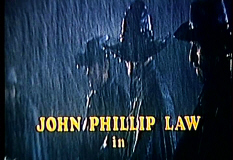 Although the film’s main interest is action—the simple pleasure of watching a couple of tough hombres take care of business—Petroni’s stylistic flair lends a symbolism of its own to these proceedings. The treachery and isolation of the Western landscape, the inexorability of fate, and the development of a surrogate father/son relationship between Ryan and Bill are all evoked.
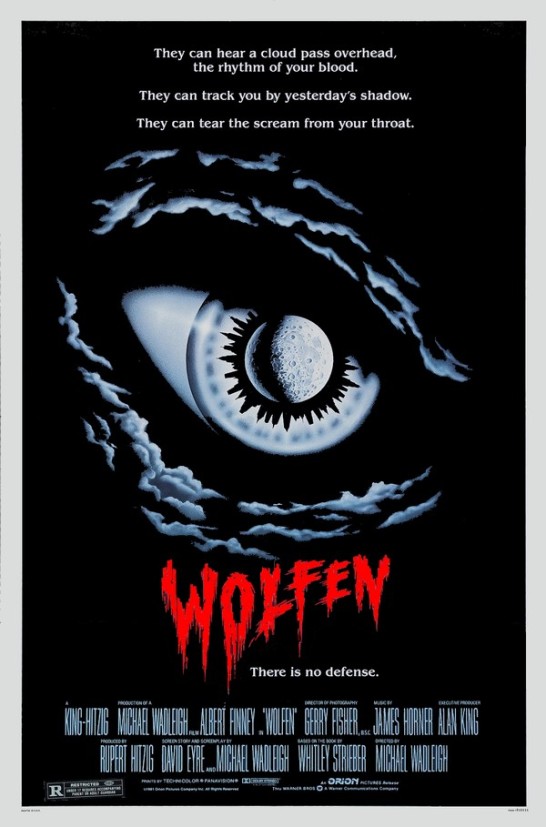 WOLFEN (1981)
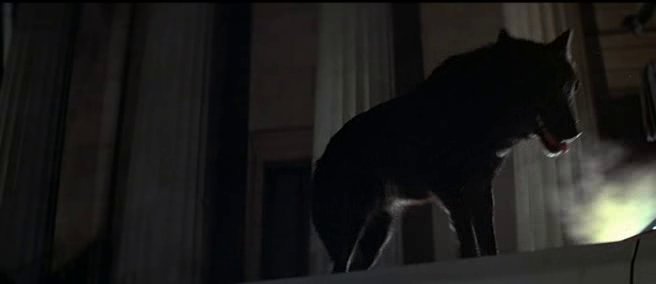 This theme is hauntingly imbued in images of industrial and residential dilapidation—urban rubble through which the wolves stalk their prey. As Wilson tracks his targets, a tingling, stealthy score by James Horner accents (and never smothers) the film’s shivery atmosphere. A film as dark, graceful and bewitching as its elusive antagonists. 5 / 5
 The golden age of radio drama may be in the past, but audiobook subscription service Audible supplies an enthralling extension to the saga of Warrant Officer Ellen Ripley, and of creatures and memories that also refuse to be left behind. The play is approximately novel-length (indeed based a novel by Tim Lebbon) and divided into chapters of around 25-30 minutes long, complete with not merely dynamic voice performances, but also sound-effects and a score—by turns eerie, momentous and mournful—to bring the production to vivid, egg-opening life.
 The narrative picks up after the events of the first film as Ripley’s escape pod is intercepted by the crew of a mining vessel, who begin having a xenomorph problem of their own. Consequently Ripley, here played with all the characteristic mannerisms by Lauren Lefkow, is on hand to tell them how fucked they are—before becoming the key adviser against the threat. Meanwhile, android Ash, played by (and dismembered as) Ian Holm in the original film and now performed by Rutger Hauer, is up to old tricks. Hell-bent on fulfilling his mission for the Company of transporting an intact alien specimen, Ash’s disembodied artificial intelligence infiltrates and contaminates various ship systems to sabotage this new team’s efforts. Conceptually and tonally, the film strikes a balance between the first and second films, combining the original’s focus on malignant AI and a crew under-prepared for the menace they face with plenty of action as the creatures close in.
 This new story is thrilling and energetic, yet retains the technical flourishes that helped plausibly underpin the films. The only let-down here is that while the drama initially presents as an ‘alternative’ timeline, later turns of the narrative work to re-integrate what has happened into the existing Alien chronology in a manner that seems clunky and unnecessary. Nevertheless, this hardly makes much of an acid burn on such an gripping and gorgeous production. A must for fans of the franchise. 4.5 / 5
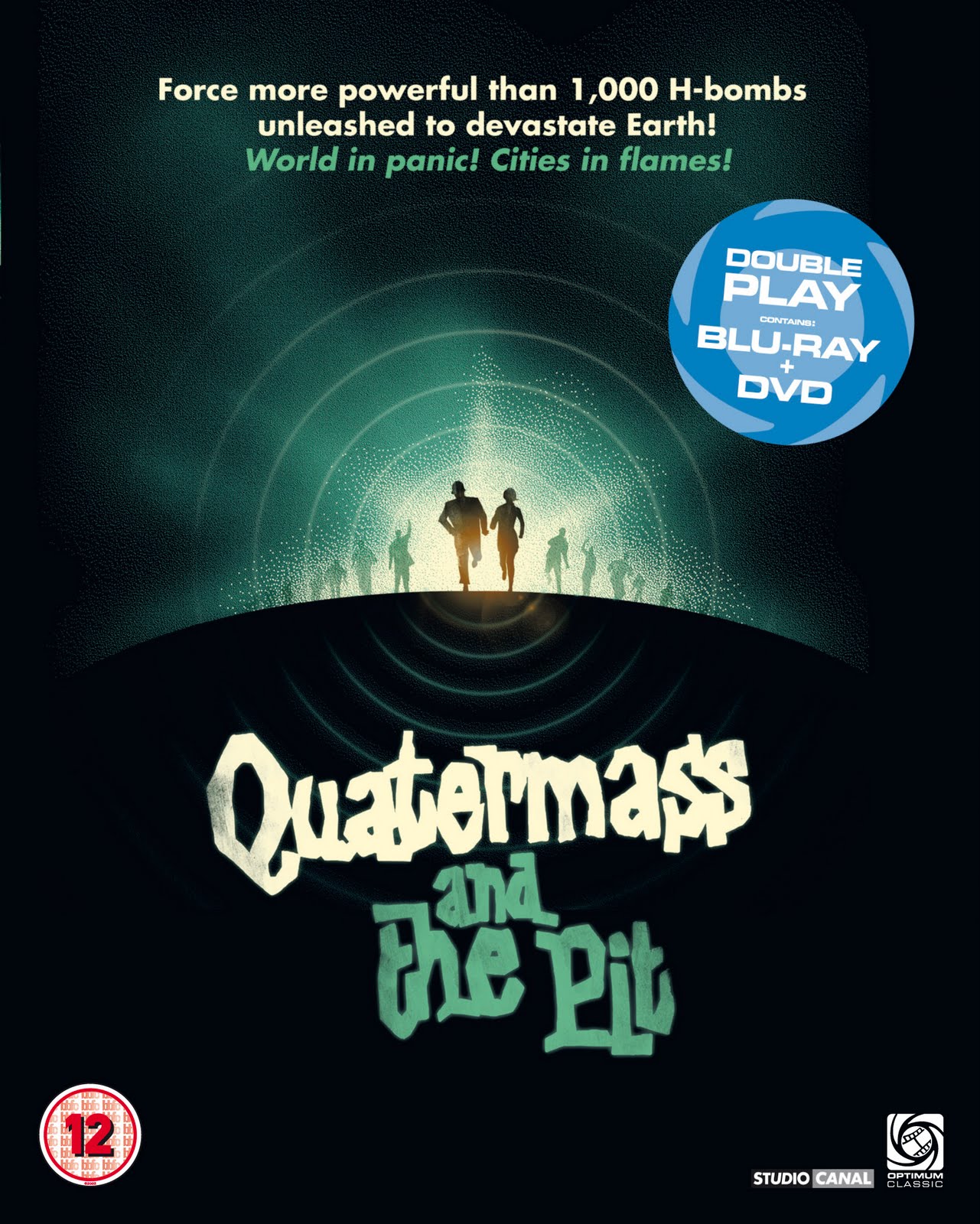 QUATERMASS AND THE PIT (1967)
 It's all done with mirrors