 RAZORBACK (1984)
Dir. Russell Mulcahy
From deep within an Australian Outback as grotesquely gothic as any Tim Burton landscape comes Razorback, feral boar titan, to freight-train through your living room and steal your baby. Yes, your baby. I don’t know what it does with the baby. Presumably it eats him. The film doesn’t get a whole lot more sensible than that, but for those with a taste for horror with an absurdist touch: pig out.
To the land of the weird ventures American journalist and animal-lover Beth Winters (Judy Morris), intent on reporting the country’s heartless massacre of marsupial ‘pests’. Yet with Hogzilla on the prowl the story is bigger than she realizes. Not only is the wildlife more than she bargained for, but so too are the locals, the worst of whom—a couple of yawping, greasy, black-tooth hunters—intrude with a villainy of their own.
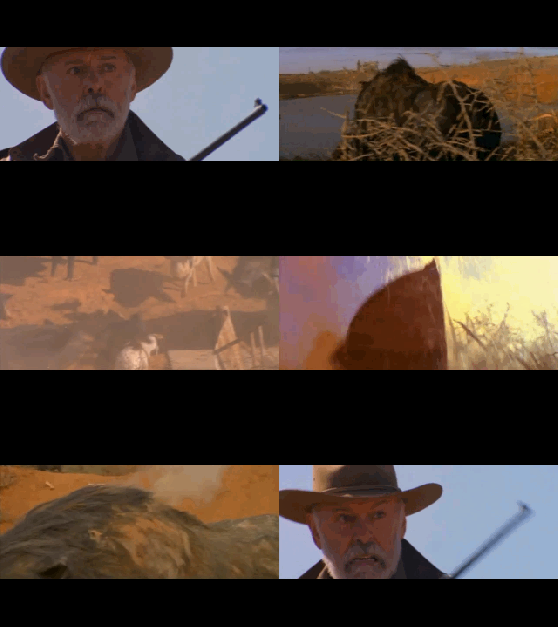 Meanwhile, grizzled pig-shooter Jake (Bill Kerr), grandfather of the stolen baby, begins a Quint-like quest against the beast. Regrettably, Jake is but a shadow of his animal-horror influences, and the film suffers here from its indecisive tone: it’s hard to develop a scarred and serious character in a circus like this. Leaving that aside, Razorback is stylish and garishly striking—fairly well-financed but shot with an irresistible exploitation verve. The final showdown with the big boy (with much organ-pounding over the soundtrack) is sort of scarier than the rest of it, but foremost a silly delight. 3.5 / 5
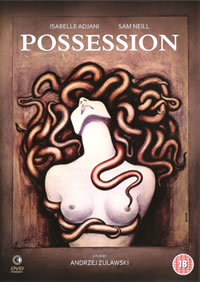 An intense and aggressive domestic drama descends into experimental horror in Żuławski’s cult classic Possession. Steered visually by the restless cinematography of Bruno Nuytten the film constructs a world pervaded by uncertainty, discomfort, and a sense of worse to come. The initial horror is of an everyday nature: Mark (Sam Neill) arrives home to Berlin to discover his wife Anna (Isabelle Adjani) has been having an affair and is not the least bit sorry about it either. He turns on the insecure male hysterics and quickly drives her to a similar pitch—then beyond. However, in an apartment downtown Anna has been keeping (and gradually growing) a more monstrous secret, and as her behavior becomes more and more unhinged the film explodes into a warped and chaotic exploration of loathing, desire, and frustration.
 possible identification or sympathy, risking a kind of objectifying ‘insanity porn’—a display foremost for our shock and amazement. Or perhaps in its transgressive and apocalyptic intensity (far beyond narrative or meaning) the moment achieves a kind of liberatory chaos? I expect opinions vary.
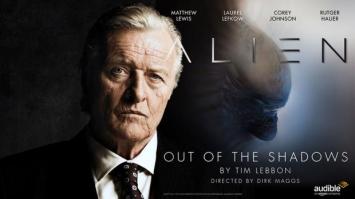 The golden age of radio drama may be in the past, but audiobook subscription service Audible supplies an enthralling extension to the saga of Warrant Officer Ellen Ripley, and of creatures and memories that also refuse to be left behind. The play is approximately novel-length (indeed based a novel by Tim Lebbon) and divided into chapters of around 25-30 minutes long, complete with not merely dynamic voice performances, but also sound-effects and a score—by turns eerie, momentous and mournful—to bring the production to vivid, egg-opening life.
 The narrative picks up after the events of the first film as Ripley’s escape pod is intercepted by the crew of a mining vessel, who begin having a xenomorph problem of their own. Consequently Ripley, here played with all the characteristic mannerisms by Lauren Lefkow, is on hand to tell them how fucked they are—before becoming the key adviser against the threat. Meanwhile, android Ash, played by (and dismembered as) Ian Holm in the original film and now performed by Rutger Hauer, is up to old tricks. Hell-bent on fulfilling his mission for the Company of transporting an intact alien specimen, Ash’s disembodied artificial intelligence infiltrates and contaminates various ship systems to sabotage this new team’s efforts. Conceptually and tonally, the film strikes a balance between the first and second films, combining the original’s focus on malignant AI and a crew under-prepared for the menace they face with plenty of action as the creatures close in.
 This new story is thrilling and energetic, yet retains the technical flourishes that helped plausibly underpin the films. The only let-down here is that while the drama initially presents as an ‘alternative’ timeline, later turns of the narrative work to re-integrate what has happened into the existing Alien chronology in a manner that seems clunky and unnecessary. Nevertheless, this hardly makes much of an acid burn on such an gripping and gorgeous production. A must for fans of the franchise. 4.5 / 5
 QUATERMASS AND THE PIT (1967)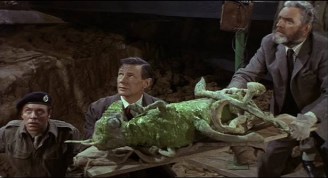
 CREATURE FROM THE BLACK LAGOON (1954)
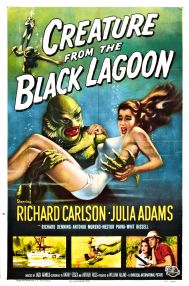 and fins, the monster is also conspicuously anthropomorphic, and the suggestion of our continuity with so strange a cousin provokes unease through a blurring of the human-animal binary.
 It's all done with mirrors